
Have you ever been betrayed by people you thought you could trust? Have you ever had false accusations levelled against you? Have you ever been silenced for expressing your faith in Jesus?
Whatever you or I may have gone through, I think I’m safe in saying it will be nothing compared to the persecution being experienced by Christians in countries like Korea, China, Turkey and Iran.
Just recently, I sat and listened to the voices of some of these persecuted believers in Jesus.
We were at a conference, packed with people who wanted to hear what they had to say; to learn from their experiences; to get ready for the day when we, too, might have to face the unthinkable.
We heard testimonies that spoke of Jesus’ presence in crowded prison cells; Jesus’ still small voice piercing the silence of solitary confinement; Jesus’ peace in the midst of biased and protracted judicial proceedings; and faith in Jesus holding firm, even when he seemed to be both absent and silent.
I came away from the conference feeling profoundly humbled, challenged and inspired.
I also found myself recalling the times when work used to regularly take me all over the world, including to countries where Christians are in a minority and persecution is a common occurrence.
As this happened, I sensed the Holy Spirit reminding me of a ‘light through the cracks’ story* from one of those work trips.
***
It’s late 2010 and I’ve been invited to travel to one of the Central Asian States.
The plan is strategic: key people will come and join me, from all the neighbouring ‘stans’, and I will facilitate a ‘training of trainers’ workshop, through simultaneous translation, which they will roll out with others when they return home. I will also visit some partner projects that my colleagues are supporting.
The training goes well. So do the project visits.
But what arrests my attention is a dinner-time conversation with one of the workshop participants.
On the evening in question, a dark-haired well-dressed woman is sitting next to me at the dining table. Poised and elegant, she has a remarkable grasp of English, despite it being her third language – and I soon discover that, although she’s been reticent about sharing her thoughts aloud in the workshop, she’s more than happy to open up with me one-on-one.
“In my country, Christians aren’t even allowed to pray, let alone own a Bible,” she tells me, before explaining how her government imposes severe restrictions and controls on Christians, despite the constitution theoretically providing for freedom of religion.
Then she shares how, one evening a couple of years ago, she and her husband were in their home, praying and studying the Bible with their best friends, another Christian couple.
Under cover of darkness for fear of being caught, the four of them were huddled tightly together, using a tiny torch to highlight the words of the Bible that was open on her husband’s lap. In whispered voices, they were studying a well-known passage and offering prayers to Jesus.
Suddenly, from the room next door, they heard a loud ping on her phone.
“I immediately leapt into action,” she tells me, “as I knew instinctively what it would say.
Sure enough, it was a coded text from a trusted believer, warning them that some members of the government security services were about to do a spot-check visit on their house.
Without hesitation, she hurriedly ushered their friends out of the back door and into the silence of the night, while her husband jumped into action in the living room.
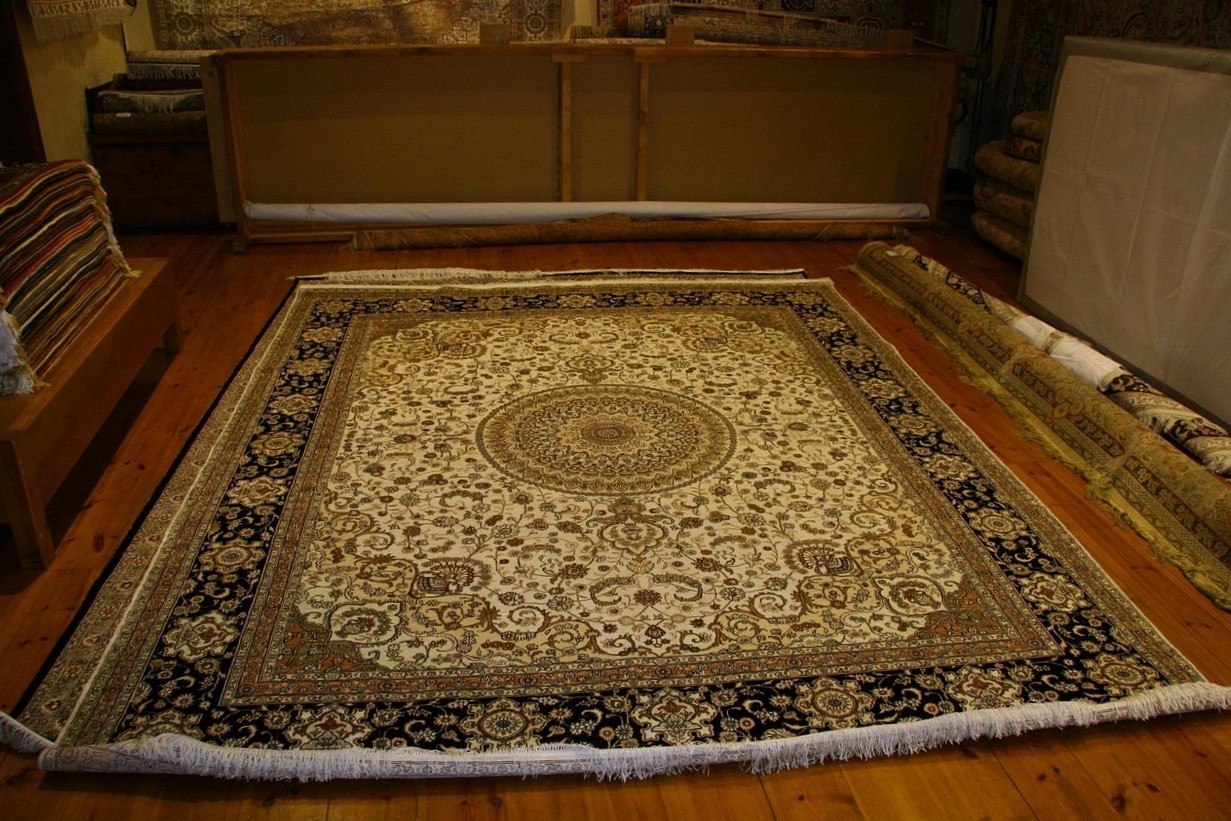
Using the tiny torch to provide just enough light, up came the rug, and then the loose floorboard underneath it. Into this hidden cavity went their precious and well-worn Bible, wrapped in a paper bag. Then the floorboard was lowered, and the rug replaced.
It was a well-practiced manoeuvre that took her husband less than two minutes to implement.
“We hadn’t had any drinks or refreshments,” she reveals, “as we never know when spot-checks will happen, and we didn’t want there to be any evidence of us having had guests.”
Gingerly turning on a dimly lit lamp in the corner of the back room, she and her husband could feel their hearts racing as they sat, held hands and prayed.
“Please Lord, send angels to protect us,” they whispered, “and please keep our precious Bible hidden from view.”
“Within minutes, there was a loud knock on the door”, she recalls.
Her husband had barely opened the door, when three security services investigators came barging over the threshold. One of them proceeded to bombard her and her husband with questions, while the other two charged from room to room, ransacking the house in search of any evidence that they followed Jesus.
“How did you feel while that was happening?” I ask her.
She admits to being terrified. “But we also felt incredibly calm,” she adds. “Later, my husband told me that he had seen two angels standing guard, one on each side of the door, so we knew we hadn’t been on our own.”
It wasn’t until the following morning, as daylight flooded in through the windows, that they were able to see the full extent of the carnage caused – and it took them a couple of days to clear up the mess.
Items had been broken; some needed to be replaced. But none of these things mattered, and I find her perspective unbelievably humbling.
“If we’d been found in possession of a Bible, let alone praying with friends, we could have ended up in prison,” she tells me, “but God heard our plea for help that evening and he sent his angels to protect us.”
***
As you reflect on this story, I’ve got two strands of thought for you to ponder:
Firstly, how do you feel about the possibility of being persecuted for your faith? Does it feel like something that only happens in far-away nations? Or have you experienced it? Either way, what can you learn from stories like the one I’ve shared?
Secondly, have you ever prayed for protection and, in response, seen angels standing guard over people, property or a particular place? If so, how did you feel? What might this teach you about the way God responds to our pleas for help, when we can sense tough times are coming?
Constructive comments are welcome, as always, below.
***
* This story has been written from memory, with the help of detailed journal entries recorded during the trip.
Photo from Public Domain Pictures via Pixabay.

4 Comments
It’s so easy to be complacent and to take our freedoms for granted, living in the West. I can’t imagine how it would feel to not be able to pray freely, not even in the privacy of my own home, without fear of being caught. Those Christians need our prayers.
I know what you mean! We’ve got so much to learn, but I’m sure the angels would come if we were to ask God to send them.
Gosh, how terrifying-and angering-this would be for me personally. Something comes to me as I read, and I think I’ll need to sit with Holy Spirit and his word to determine where I’m supposed to land. If someone were to come in to my home, and find no evidence that I was a believer, would that mean I was denying Christ? And yet, to find that evidence puts my family in jeopardy. How humbling it is to read and hear of those that do have to ask these questions for the sake of their lives, and not just because it’s something they are pondering for the day.
Thanks for this insightful comment, Rebecca! I can’t help wondering whether God sent angels to stand guard that night, because he wanted those precious believers to remain in their community, rather than be put in prison? If so, then perhaps it’s not necessarily about ‘denying Christ’, but more to do with God revealing that he knows what’s best for his people who live under these sorts of regimes, be it in prison or not? What do you think?